

The Essential Guide to Daily Creatine Needs
Over 80 percent of people who exercise regularly have heard about creatine, yet few truly understand what it does for the body. Whether you want more strength at the gym or are curious about its role in brain function, creatine is much more than a fitness buzzword. With new research showing benefits for both mind and muscle, this guide offers practical answers to help you decide if creatine belongs in your routine.
Table of Contents
- What Is Creatine And Why It Matters
- Different Forms Of Creatine Supplements
- How Much Creatine Do You Actually Need?
- Timing, Absorption, And Usage For Best Results
- Safety, Common Myths, And Potential Side Effects
- Comparing Creatine Gummies To Powders And Pills
Key Takeaways
| Point | Details |
|---|---|
| Creatine Benefits | Creatine enhances muscle performance and may improve cognitive function, making it beneficial for both athletes and active individuals. |
| Supplement Forms | The most popular creatine forms are Monohydrate, Hydrochloride, and Kre-Alkalyn, with Monohydrate being the most researched and cost-effective. |
| Ideal Dosage | A recommended dosage ranges from 2-4 grams daily, with a loading phase of 20 grams for optimal results, tailored to individual factors. |
| Safety and Myths | Creatine is generally safe for healthy individuals, but common myths about kidney damage and dehydration contradict scientific evidence. |
What Is Creatine And Why It Matters
Creatine is a powerful natural compound that plays a critical role in energy production within our body, particularly for muscle and brain function. Found naturally in foods like meat and fish, creatine serves as a rapid energy source that helps muscles perform during high-intensity activities.
At its core, creatine works by supporting adenosine triphosphate (ATP) recycling, which essentially means it helps your cells produce and regenerate energy more efficiently. According to Time, recent research suggests creatine does more than just boost muscle performance - it may also enhance brain function by supporting cellular energy production.
While our bodies produce some creatine naturally, supplementation can provide significant benefits for various populations. Key advantages include:
- Increased muscle strength and power
- Enhanced exercise performance
- Potential cognitive function improvements
- Support for muscle recovery and growth
Creatine isn't just for professional athletes or bodybuilders. Beginners Guide to Creatine demonstrates that everyday active individuals can benefit from understanding and potentially incorporating creatine into their nutritional strategy. Whether you're a gym-goer, runner, or simply someone interested in maintaining peak physical and mental performance, creatine offers a scientifically-backed approach to supporting your body's energy systems.
Different Forms Of Creatine Supplements
Creatine supplements come in several distinct variations, each with unique characteristics and potential benefits. Understanding these different forms can help you choose the most suitable option for your fitness and performance goals.
According to Now Foods, the most prominent forms include Creatine Monohydrate, Creatine Hydrochloride (Cr-HCl), and Kre-Alkalyn®. Creatine Monohydrate remains the gold standard - it's the most extensively studied form, most cost-effective, and has decades of research supporting its effectiveness in improving muscle strength and performance.
Let's break down the primary forms of creatine:
-
Creatine Monohydrate:
- Most researched form
- Most affordable option
- Proven track record of muscle performance enhancement
- Highest bioavailability
-
Creatine Hydrochloride (Cr-HCl):
- Claims higher solubility
- Potentially easier on the digestive system
- Less research compared to monohydrate
-
Kre-Alkalyn®:
- pH-buffered version
- Marketed as reducing digestive discomfort
- Limited evidence of significant performance advantages
The Rise of a New Supplement: Creatine Gummies highlights an emerging trend in creatine supplementation. While traditional powders and capsules remain popular, gummy formats offer a more convenient and palatable alternative for those who struggle with typical supplement forms. The key is finding a form that you'll consistently use and that aligns with your personal preferences and fitness objectives.
How Much Creatine Do You Actually Need?
Daily creatine intake is a nuanced topic that varies depending on individual factors like body composition, activity level, and fitness goals. Understanding your optimal dosage can make a significant difference in performance and muscle development.
According to Medical Xpress, the human body naturally produces about one gram of creatine per day, but the recommended intake ranges from two to four grams daily. This recommendation depends on your muscle mass and activity levels, with most individuals falling short through diet alone - making supplementation an attractive option.
Typical creatine dosage recommendations include:
- Loading Phase: 20g per day (split into 4 x 5g servings) for 5-7 days
- Maintenance Phase: 3-5g per day
- Body Weight Calculation: Approximately 0.1g per kg of body weight
Factors influencing your ideal creatine intake:
- Muscle mass
- Training intensity
- Diet (vegetarians/vegans typically need more)
- Individual metabolism
- Fitness goals
How Much Creatine Should I Take Daily - Is 5000mg Enough? provides additional insights into personalising your creatine supplementation. Remember, while these guidelines offer a solid starting point, individual responses can vary. Consulting with a healthcare professional or nutritionist can help you determine the most effective dosage for your specific needs.

Timing, Absorption, And Usage For Best Results
Creatine absorption is a critical factor that can significantly impact your supplementation strategy. Understanding the nuances of when and how to take creatine can help maximize its effectiveness and support your fitness goals.
For optimal results, most athletes find that timing their creatine intake around their workout provides the best absorption and muscle recovery benefits. There are several strategic approaches to creatine consumption:
Pre-Workout Timing:
- Take 3-5g approximately 30 minutes before training
- Helps saturate muscles with creatine
- Supports immediate energy production during exercise
Post-Workout Timing:
- Consume creatine within 30 minutes after training
- Muscles are most receptive to nutrient absorption
- Supports muscle recovery and growth
Daily Intake Strategies:
- Consistent daily intake matters more than precise timing
- Can be taken with or without food
- Best absorbed when combined with a small amount of carbohydrates or protein
Some individuals experience better absorption when taking creatine with a meal that includes some carbohydrates, as this can help increase insulin response and potentially improve creatine uptake. The Best Way to Take Creatine suggests that individual responses can vary, so experimenting to find your optimal timing and method is key. The most important factor is maintaining consistent daily intake, regardless of the exact timing.
Safety, Common Myths, And Potential Side Effects
Creatine supplementation has been the subject of numerous misconceptions, making it crucial to separate scientific facts from popular myths. Understanding the real safety profile can help you make informed decisions about your nutritional strategy.
According to Medical Xpress, creatine is generally safe when used as recommended, but individuals with pre-existing kidney conditions should consult a healthcare professional before starting supplementation. This highlights the importance of personalized medical guidance.
Common Creatine Myths:
- Myth: Creatine damages kidneys Reality: No scientific evidence supports this claim for healthy individuals
- Myth: Creatine causes dehydration Reality: Proper hydration actually improves creatine's effectiveness
- Myth: Creatine is a steroid Reality: Creatine is a naturally occurring compound, completely different from steroids
Potential Side Effects:
- Mild water retention
- Occasional digestive discomfort
- Temporary weight gain (water weight)
Are Creatine Gummies Safe? Busting Myths with Science in 2025 provides additional context on modern creatine supplementation. The key takeaway is that when used responsibly and in recommended doses, creatine remains one of the most researched and safest performance supplements available. Always listen to your body and consult with a healthcare professional if you have any concerns.
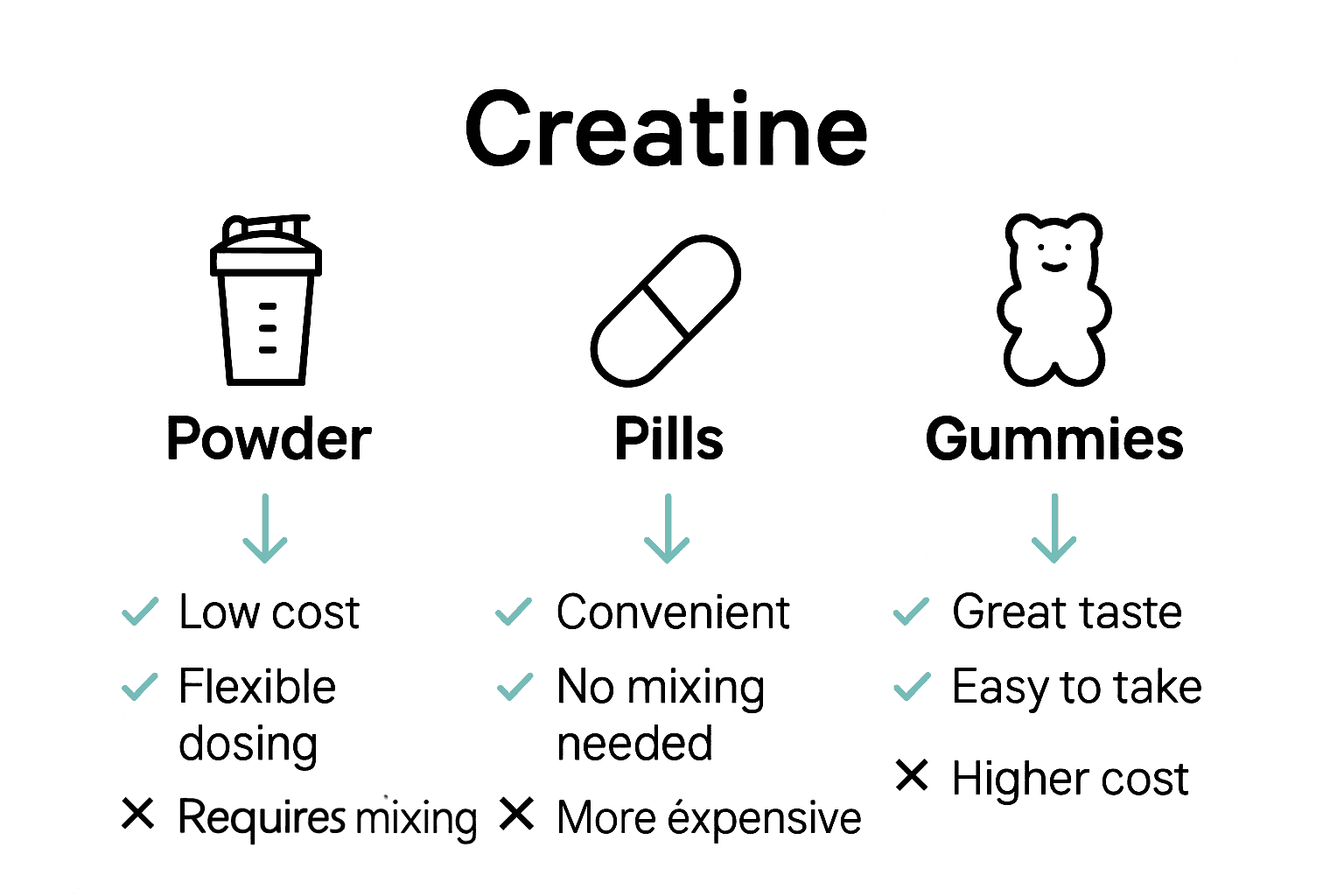
Comparing Creatine Gummies To Powders And Pills
Creatine supplementation has evolved dramatically, offering multiple consumption formats that cater to different preferences and lifestyles. Understanding the pros and cons of each delivery method can help you choose the most suitable option for your fitness journey.
Creatine Powder:
- Most traditional supplement format
- Typically most cost-effective
- Requires mixing with liquid
- Can have chalky texture
- Precise dosage control
Creatine Pills:
- Convenient for travel
- No mixing required
- Can be difficult to swallow
- May have slower absorption
- Limited flavour options
Creatine Gummies:
- Enjoyable, flavourful experience
- Easy to consume
- No mixing or water needed
- Portable and discreet
- Potential for better adherence due to pleasant taste
Do Creatine Gummies Really Work? Comparing Gummies vs Powder provides deeper insights into the effectiveness of different creatine formats. The key is finding a method that you'll consistently use - the best supplement is the one you'll take regularly. Ultimately, all formats deliver the same core benefits when consumed consistently and as recommended.
Take Control of Your Daily Creatine Needs with Summit Supplements
If you want to overcome confusion about how much creatine to take daily and find a simple, effective way to boost your strength and recovery then you are in the right place. The Essential Guide to Daily Creatine Needs highlights common challenges like choosing the right dosage, managing absorption, and avoiding side effects. We understand how frustrating it can be to juggle fitness goals with a busy lifestyle while trying to navigate scientific advice.
At Summit Supplements we offer a transparent solution that fits seamlessly into your routine. Our Creatine Gummies deliver 5,000 mg of creatine monohydrate per serving in a vegan friendly, zero sugar, naturally flavoured format. This is perfect for those who dislike powders or pills yet want to support consistent muscle strength and performance. Backed by third party Eurofins testing and designed specifically for the everyday athlete our gummies make supplementation simple and enjoyable without compromise.
Discover how easy it is to upgrade your daily creatine intake with a clean scientifically supported product that prioritises your health and results. Visit Summit Supplements now to explore our full range and start performing better today. Don’t wait to join the growing community of people who train hard, work hard, and recover smarter with supplements made for real life.
Frequently Asked Questions
How much creatine should I take daily?
The recommended daily intake typically ranges from 2 to 4 grams, depending on your muscle mass and activity level. Most individuals may benefit from a loading phase of 20 grams for 5-7 days, followed by a maintenance phase of 3-5 grams per day.
What are the different forms of creatine supplements?
The most common forms of creatine include Creatine Monohydrate, which is the most researched and cost-effective; Creatine Hydrochloride (Cr-HCl), known for higher solubility; and Kre-Alkalyn®, which is pH-buffered. Each has unique properties that may influence your choice depending on personal preferences.
When is the best time to take creatine?
For optimal absorption, it is recommended to take creatine either 30 minutes before a workout or within 30 minutes after exercising. However, maintaining consistent daily intake is more crucial than the exact timing.
Are there any potential side effects of creatine?
While creatine is generally safe for healthy individuals, some may experience mild water retention, digestive discomfort, or temporary weight gain. It's advised to consult with a healthcare professional if you have any pre-existing conditions or concerns.
Recommended
- How to take creatine monohydrate: creatine timing, daily intake and mu – Summit Supplements
- How Much Creatine Should I Take Daily - Is 5000mg Enough? – Summit Supplements
- Beginners Guide to Creatine – Summit Supplements
- Why Everyone Should Be Taking Creatine - Not Just Bodybuilders – Summit Supplements